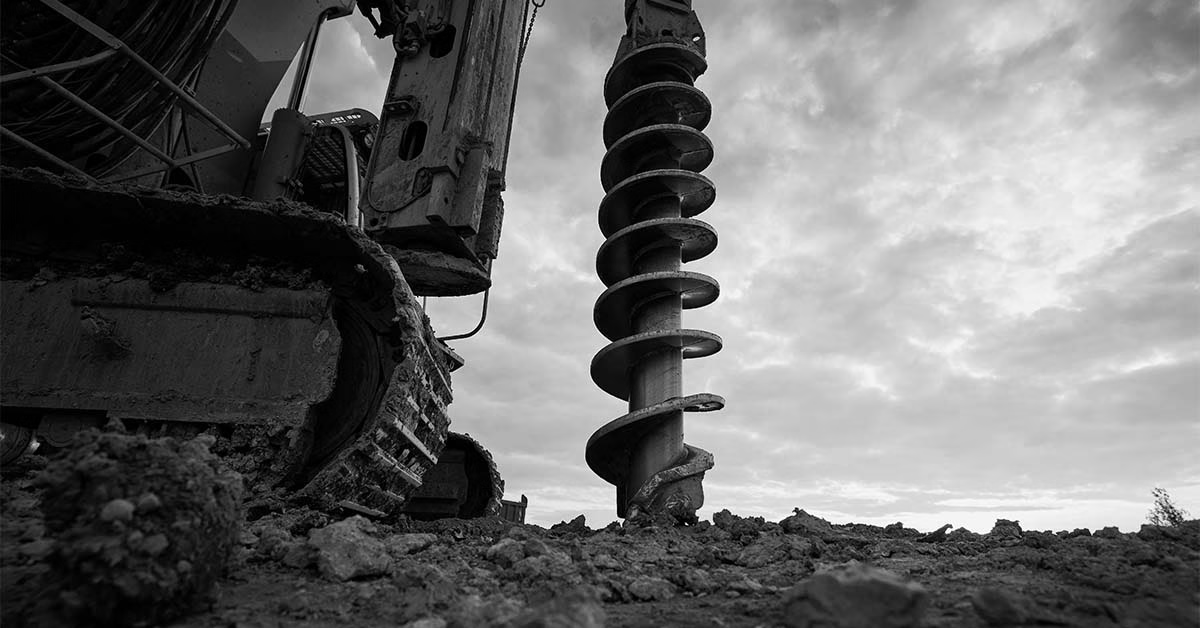
Piling and borehole drilling sit at the heart of South Africa’s construction and water-resource sectors.…
Monday Tech Talk – Common Mistakes by OHS Auditors
In the construction industry, safety is not optional. It is a legal obligation and a responsibility that affects every person on site.
Audits are one of the key tools used to ensure that health and safety systems are not only in place, but actually working.
But here is the reality…
When audits are done poorly, they don’t just fail. They create a false sense of compliance — and that is where real risk begins. This Monday, Tech Talk unpacks the most common mistakes made by OHS auditors, and more importantly, how to avoid them.
Why Effective Auditing Matters
Auditing plays a critical role in maintaining safe and compliant construction environments. When conducted properly, audits help protect worker health, prevent legal penalties, and strengthen the overall safety culture on site.
Under the Occupational Health and Safety Act, employers are required to provide a working environment that is safe and without risk. The Construction Regulations further require that audits are conducted regularly, health and safety plans are approved, and safety files are not only maintained but actively used.
Audits are therefore not administrative exercises. They are a legal control mechanism and a frontline risk management tool that directly influences how safety is implemented on site.
The Role of an OHS Auditor
An OHS auditor’s responsibility extends far beyond completing a checklist. The role requires objective evaluation of compliance with legislation, identification of hazards and risks, and verification that both documentation and practical implementation align.
The emphasis is on verification. It is not enough to confirm what is written — the auditor must determine what is actually happening on site.
Common Mistakes by OHS Auditors
One of the most significant challenges is a poor understanding of legislation. Without a solid grasp of the OHS Act, Construction Regulations, and relevant SANS standards, auditors risk producing incorrect findings and missing critical non-compliances. This ultimately weakens the credibility and effectiveness of the audit.
Another common issue is the tendency to conduct document-only audits. In these cases, auditors rely heavily on paperwork such as method statements and risk assessments, without verifying whether these are being followed in practice. This creates a disconnect where compliance exists on paper, but risks remain active on site.
Closely linked to this is inadequate site inspection. Without physically observing work activities, auditors are unable to identify unsafe practices or emerging risks. A limited or rushed site walk significantly reduces the value of the audit.
A more subtle but equally serious issue is the lack of auditor independence. External pressures from contractors, project teams, or client expectations can influence findings, resulting in biased reports or overlooked issues. Maintaining objectivity is essential to ensure that audits remain credible and effective.
Another overlooked aspect is the failure to engage with workers. Many audits focus primarily on management, yet workers often have the clearest understanding of day-to-day conditions, unsafe practices, and operational challenges. Without their input, auditors miss critical insights into actual site risks.
Poor evidence collection further undermines audit quality. Findings that are not supported by photographs, legislative references, or clear documentation are difficult to defend and often lead to disputes or ineffective corrective actions.
Finally, a lack of follow-up is where many audits lose their impact entirely. Identifying issues without implementing action plans, setting deadlines, or conducting follow-up audits results in recurring problems and unmanaged risks. An audit is only effective if it drives continuous improvement.
Best Practices for Effective Audits
An effective audit is built on a strong understanding of legislation, combined with practical engagement on site. It requires active observation of work activities, meaningful interaction with workers, and a disciplined approach to collecting and documenting evidence.
Clear and structured reporting ensures that findings are actionable, while consistent follow-up ensures that identified issues are resolved and do not reoccur. Ultimately, effective auditing is about aligning compliance with real-world practice.
OHS auditing is a critical function within the construction industry, but its effectiveness depends entirely on how it is conducted.
Avoiding common mistakes leads to more accurate compliance assessments, safer working environments, and a stronger safety culture. Most importantly, it ensures that safety is not just documented, but actively implemented on site.
Because in the end, safety is not what is written in a file — it is what happens on site.
Related Posts