In the construction industry, safety is not optional. It is a legal obligation and a…
Monday Tech Talk – Excavations: Safety at the Foundation of Construction
Excavation may look like simple digging from the outside, but in the construction environment, it is one of the most complex and high-risk activities on site. It forms the foundation for everything that will eventually be built above ground — and when excavation is unsafe, the entire project, from structure to schedule to worker safety, is immediately at risk.
Excavation work is not just about removing soil. It is about creating space safely, predicting the behaviour of the ground, controlling collapse, navigating underground services, and complying with strict legal requirements. Like the roots of a tree, if the excavation is weak or unstable, the entire structure above it is compromised.
This article unpacks the purpose, risks, protective systems, and regulatory controls that govern excavation work in South Africa.
What Is Excavation?
Excavation is the process of removing soil, rock, or other materials to create space for foundations, trenches, utilities, or structural components.
It is the first step that makes all other construction possible — the blank canvas on which the project will be built. Without a stable and properly prepared excavation, no project can move forward safely.
Why Excavations Are Done
Excavations are carried out to:
- Construct foundations
- Install underground utilities such as water, sewer, gas, electricity, and fibre
- Build basements or lower-ground levels
- Prepare land for structural elements
Every building, service connection, or below-surface structure begins with this step.
Methods of Excavation
Excavation is performed either:
Manually — using shovels, picks, and hand tools.
This method is slower but safer near delicate utilities such as gas lines or fibre-optic cables.
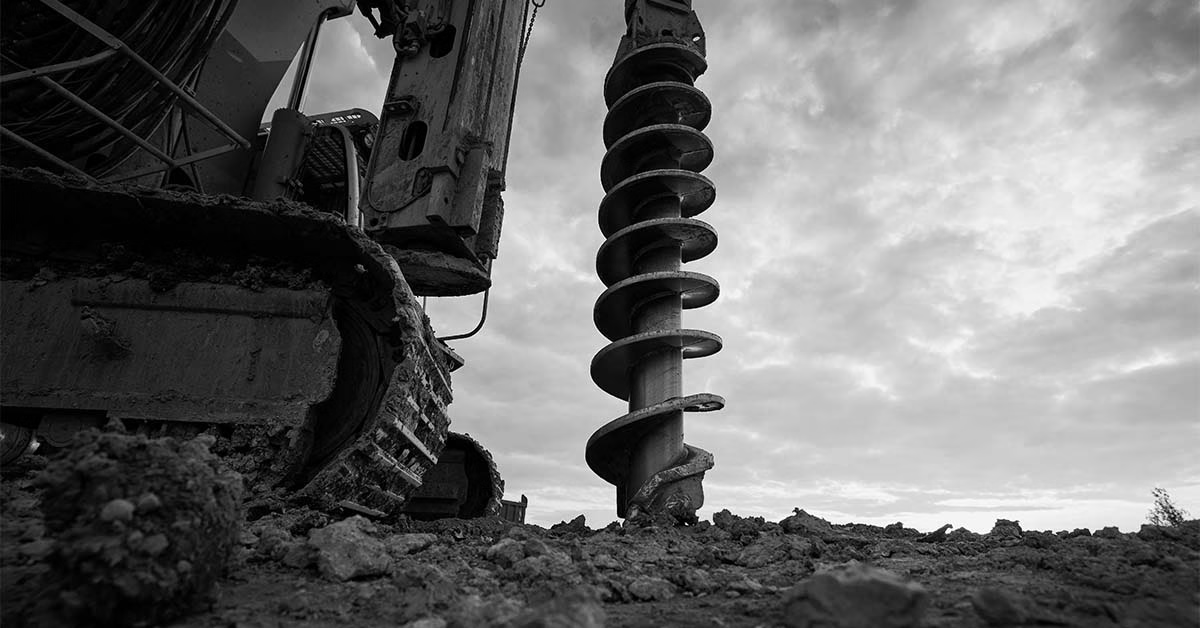
Mechanically — using excavators, bulldozers, TLBs, or backhoes.
This is efficient but must be carefully planned to avoid striking underground services or causing collapse.
The key principle: choose the method that suits the ground conditions, risks, and required precision. Excavation is not about digging fast — it is about digging right.
Understanding the Risks
Excavation is consistently ranked as one of the most dangerous construction activities. Major hazards include:
- Cave-ins — the number one cause of fatal incidents
- Falling objects — loose soil, rocks, or tools striking workers
- Burial or entrapment — even one cubic metre of soil can weigh as much as a small car
- Struck-by incidents — workers hit by moving machinery
- Musculoskeletal injuries — from improper lifting or manual handling
Soil does not negotiate — if it becomes unstable, it collapses instantly.
Planning and Regulatory Requirements
Excavation must never begin without thorough planning. Before breaking ground, teams must:
- Conduct a detailed risk assessment
- Prepare a fall protection plan
- Obtain permits and wayleaves
- Review drawings for underground utilities
Wayleaves act as a map of hidden hazards beneath the earth. Striking a live electrical cable or major pipeline can stop the project, damage infrastructure, or result in fatal injury.
Types of Excavations
Different excavation forms include:
- Strip excavations — removal of topsoil
- Basement excavations — deep excavations for below-ground structures
- Trench excavations — narrow, elongated excavations for utilities
Each type carries its own set of risks. A trench, for example, is a confined space with high collapse potential, while a basement excavation may affect adjacent buildings or roads.
Common Excavation Hazards
Key hazards include:
- Unprotected trench edges
- Falling materials
- Unstable soil conditions
- Inadequate supervision
- Incorrect or missing PPE
- Pressure to “work faster” despite unsafe conditions
Excavation failures often occur when planning is rushed or protective systems are ignored.
Controlling Excavation Risks
Risk control requires:
Competent supervision — only trained, experienced persons should oversee excavation work.
Risk assessments that directly inform protective actions.
Protective systems like shoring, benching, or trench boxes.
Mandatory PPE — including hard hats, boots, gloves, and reflective wear.
Emergency plans — clear procedures for collapse, entrapment, or utility strike incidents.
Training and supervision — safety is not a “learn on the job” discipline.
Wearing PPE is like wearing a seatbelt — not because you expect an accident, but because it protects you if one happens.
Excavation Inspections
By law, a competent person must inspect excavations:
- Before every shift
- After blasting
- After heavy rain
- After any collapse or ground movement
- After support systems are damaged
Every inspection must be recorded — memory is not evidence, but written records are.
Safe Access and Egress
Workers must be able to enter and exit excavations safely. Ladders or access points must be located within six metres of workers at all times.
Attempting to climb out of a trench without proper access is not only unsafe — it could prevent workers from escaping during a collapse.
Support Systems: Shoring, Sloping, and Benching
To prevent cave-ins, excavation support systems may include:
- Shoring — trench boxes, sheet piles, H-beams, sandbags
- Sloping — cutting the soil back to reduce pressure
- Benching — creating step-like levels to catch falling soil
These systems are essential for all excavations deeper than 1.5 metres.
Lateral Support Systems
For deeper or complex excavations, engineers implement:
- Soldier piles
- Soil nails
- Secant pile walls
- Rock anchors
These prevent the surrounding ground from shifting or collapsing into the excavation. Think of them as structural reinforcement for the earth itself.
Barricading and Signage
Excavations must always be clearly barricaded and signed. This protects workers, pedestrians, and road users.
Barriers may include concrete blocks, netting, tape, or road closure systems. Night-time signage is critical to prevent accidental falls or vehicle intrusion.
National Building Regulations – Part G
Part G outlines legal requirements, including:
- Excavations may not endanger property or services
- Any excavation deeper than 3 metres requires written authorisation
- Local authorities must be notified at least seven days before excavation begins
Failure to comply is a criminal offence. These are not guidelines — they are enforceable laws.
Excavation is where construction begins, but it is also where the risks are greatest. By planning thoroughly, appointing competent persons, and implementing proper protective systems, we prevent incidents before they happen.
Every excavation poses a question: will we simply dig — or will we lead with safety?
Related Posts