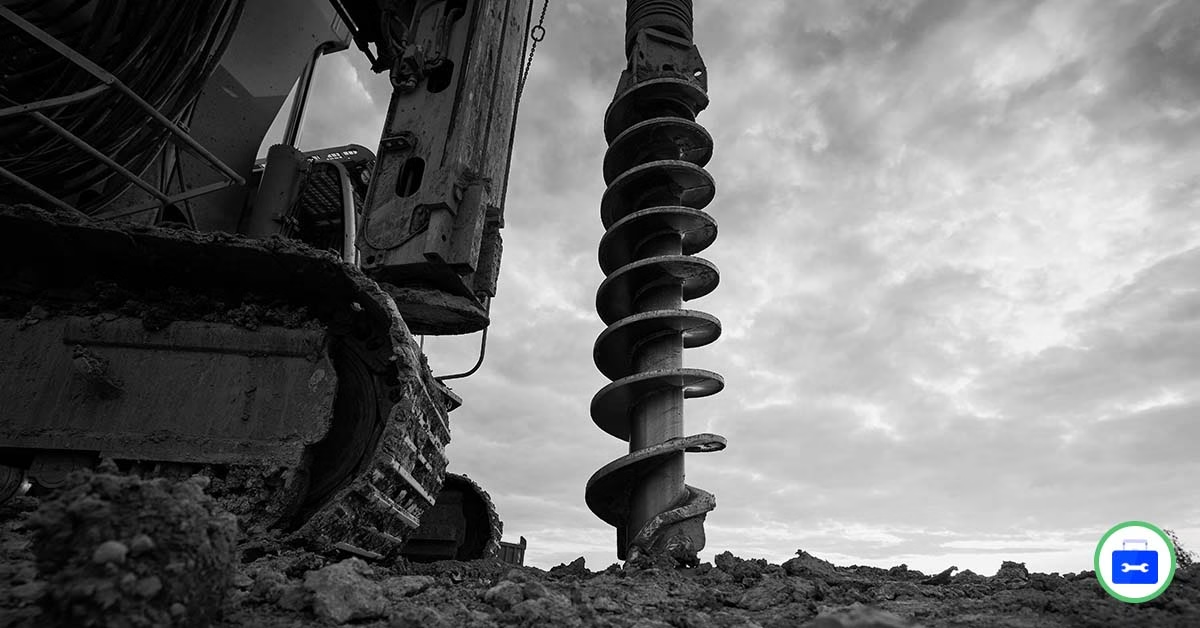
Piling rigs are among the most powerful and complex machines found on construction sites. Their…
Toolbox Talk – Common Site Non-Compliances Seen Early in the Year
At the start of the year, many construction sites experience a familiar pattern: the work restarts quickly, but safety systems lag behind. New teams come on board, programmes are under pressure, and sites reopen after shutdowns before controls are fully re-established.
This is where repeat non-compliances appear. Not because teams are careless, but because early momentum often prioritises production over structure. This toolbox talk highlights the most common early-year non-compliances seen on sites and, more importantly, how to prevent them before they become incidents.
INCOMPLETE SAFETY DOCUMENTATION
One of the most frequent early-year issues is incomplete or outdated safety documentation. This often happens when projects restart without a full review of site files or when new workers arrive before systems are updated.
Common issues include:
- Site files not updated
- Missing or incomplete induction registers
- Risk assessments not approved before work starts
Why it matters
Without approved documentation, work may not be legally compliant, hazards are not properly controlled, and decision-making becomes reactive rather than planned.
Control measures
- Keep all safety documentation available on site
- Conduct mandatory site inductions before work begins
- Ensure all risk assessments and method statements are approved prior to commencement
POST-SHUTDOWN POOR HOUSEKEEPING
After shutdown periods, housekeeping is often overlooked while teams rush to restart work. Leftover materials, blocked walkways, and accumulated debris quickly create unnecessary hazards.
Common issues include:
- Materials lying around site
- Debris creating trip hazards
- Walkways and access routes blocked
Why it matters
Poor housekeeping significantly increases the risk of slips, trips, and falls, especially in the first weeks back on site.
Control measures
- Conduct a full site clean-up before work resumes
- Assign clear housekeeping responsibilities
- Keep walkways, access routes, and emergency exits clear at all times
INADEQUATE PPE USE
Personal Protective Equipment remains the last line of defence, yet it is frequently misused or neglected early in the year, particularly with new teams or subcontractors.
Common issues include:
- PPE not worn consistently
- Incorrect PPE selected for the task
- Damaged or worn PPE still in use
Why it matters
When PPE fails, there is often no secondary protection in place, increasing the likelihood of injury.
Control measures
- Replace damaged or worn PPE immediately
- Enforce PPE requirements consistently across all teams
- Supervisors must lead by example and reinforce correct PPE use daily
LAPSES IN SUPERVISION
Reduced supervision is a critical risk factor during early-year operations. New workers, unfamiliar tasks, and incomplete briefings create gaps that lead directly to unsafe behaviour.
Common issues include:
- New workers unsure of site procedures
- No daily task briefings
- Unsafe work continuing without intervention
Why it matters
Lack of supervision allows unsafe behaviours to become normalised, increasing the likelihood of incidents and near misses.
Control measures
- Conduct daily toolbox talks and task briefings
- Ensure supervisors are present and actively monitoring work
- Encourage workers to report unsafe conditions and behaviours early
START THE YEAR STRONG
Early-year non-compliances are predictable, which means they are preventable. Taking the time to reset systems, reinforce expectations, and visibly lead safety from day one sets the tone for the rest of the project.
Strong starts reduce incidents, protect workers, and prevent the cycle of reactive safety management later in the year.
This toolbox talk can be used as a practical reminder that safety is not restarted automatically after a shutdown, it must be intentionally rebuilt.
Download the full Toolbox Talk document on Common Site Non-Compliances Seen Early in the Year below:
Related Posts