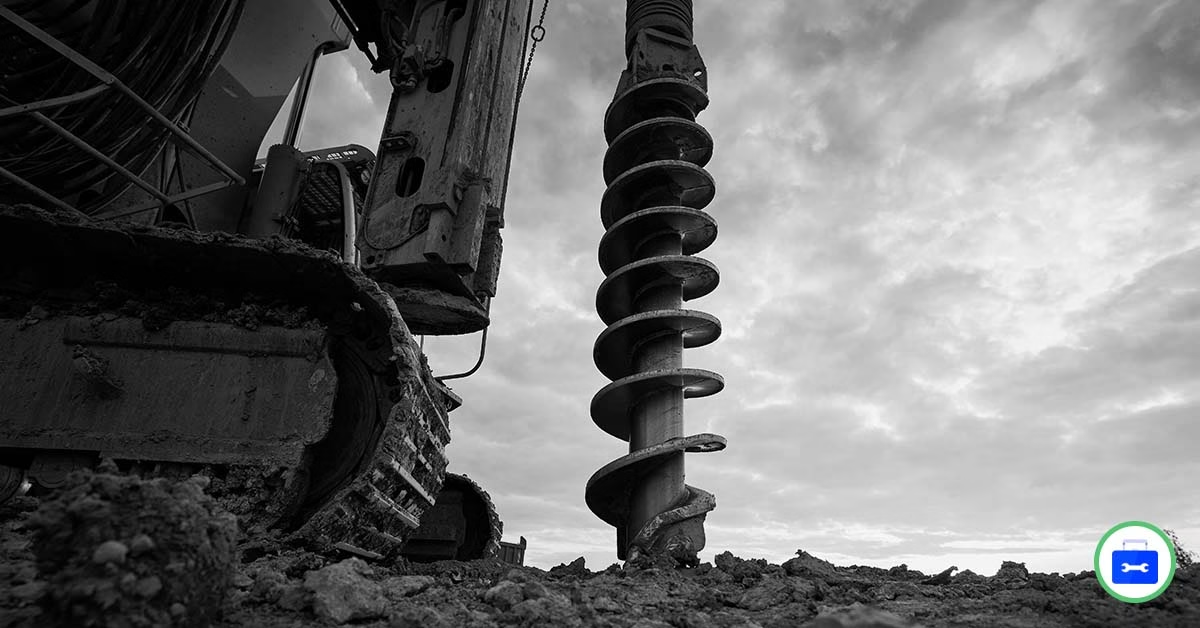
Piling rigs are among the most powerful and complex machines found on construction sites. Their…
Toolbox Talk – Lifting Devices: Daily Safety Checks
Hand-powered lifting devices are used daily across construction, workshops, mining, and maintenance environments, which means the risk of misuse is high if we don’t apply proper safety controls.
What Counts as a Hand-Powered Lifting Device?
Hand-powered devices are tools that lift or suspend loads using manual force, not motor power. Examples include:
- Chain blocks
- Lever hoists
- Ratchet hoists
These devices require the same level of compliance as any lifting machine.
Legal and Compliance Requirements
To keep operations safe and compliant:
- They must undergo a load test every 12 months by a certified Lifting Machinery Inspector (LMI).
- A competent person must conduct 6-monthly inspections of all hooks, chains, gears, and safety components.
- Each device must have a clearly marked Safe Working Load (SWL) that is easy for the operator to see.
Operator Responsibilities Before Use
Before using any hand-powered lifting equipment:
- Inspect for wear, cracks, bent hooks, stiff chains, or unusual noises.
- Check that the SWL is appropriate for the load you intend to lift.
- Ensure all safety catches are working.
- Report defective equipment immediately — do not attempt to repair it yourself.
The Most Overlooked Risk
One crucial point highlighted:
The structure the device is attached to must also be able to carry the load.
Many failures happen not because the chain block fails, but because the beam, support, or scaffolding wasn’t designed for the load.
Hand-powered lifting devices are simple, but the risks are not. Follow the required inspections, test requirements, and daily checks to ensure safe lifting and prevent serious incidents.
Download the full Toolbox Talk document on Lifting Devices: Daily Safety Checks below:
Related Posts